Dear Readers,
Welcome to my young adult materials blog. It was done as a project for Professor Beth Wrenn-Estes' LIBR 265 Section 10 Young Adult Materials class for the San Jose State Master's of Library and Information Science. It is a collection of fifty different materials intended to be used by young adults between the ages of fifteen and eighteen.
On the side bar, there is a page dedicated to the Table of Contents. This page has the complete listing of the initial fifty materials. Additionally, there is a page dedicated to the First Defense File. The First Defense File is the process I would follow if there is a challenge to any of the materials.
Please enjoy as you read!
Thank you!
John Harbaugh
Tuesday, May 13, 2014

A Clockwork Orange
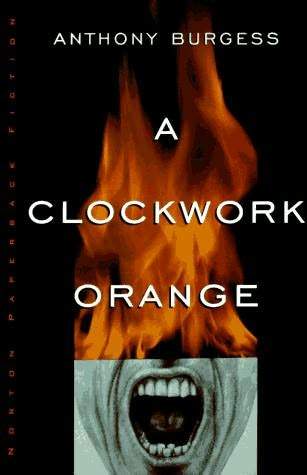
Title: A Clockwork Orange
Author: Anthony Burgess
ISBN: 9780393312836
Publisher: W. W. Norton & Company
Copyright: 1995 (1963)
Genre: Science Fiction
Age
Range: 17+
Reader’s Annotation: Alex, a fifteen year old juvenile
delinquent, narrates his rampage of ultra-violence and reformation.
Plot Summary: Alex is a fifteen year old juvenile delinquent
that lives in the not so distant dystopian England. He pals around with his
gang of friends, or droogs, Dim, Georgie, and Pete. Alex is an intelligent,
witty sociopath with a taste for violence and Beethoven. They all meet at the
Korova Milk Bar to drink what’s called milk-plus, a concoction of milk and a
choice of drugs. They drink it with a drug called “knives” because it keeps
their senses sharp. That evening, the gang beat up a scholar, assault a
storekeeper and his wife, rob the store, stomp a panhandler, and battle against
a rival gang. They continue to countryside where they break into an isolated
house and beat up the husband and rape the wife. Back at the bar, there is
in-fighting amongst the gang. Alex goes home to enjoy some classical music.
Alex
ditches school and gets a visit from a truant officer/juvenile probation
officer. Alex meets two ten year olds in a record store, takes them to his
parent’s flat, gives them alcohol, injects himself with a drug, and date rapes
them in their incapacitated state. Later that evening, he meets up with his
gang. Georgie challenges Alex’s leadership by demanding a “man sized” job. He
stops the mutiny by cutting Dim’s hand and fighting Georgie. They break into a
wealthy, elderly woman’s house which was Georgie’s idea. In the violence, the
woman dies. Dim knocks Alex out of revenge and so that Alex can take the blame
for the death. Alex is sentenced to prison for murder. He gets a job playing
the religious music at chapel. The chaplain mistakes Alex’s interest in the
Bible for faith, but Alex is only looking for the violent passages.
Alex is
framed for a murder inside the prison. He volunteers for an experimental behavior-modification
treatment called the Ludovico Technique to get out of prison sooner. It is a
version of aversion therapy. When injected with the serum, Alex gets sick while
watching graphically violent films. It conditions him to suffer crippling
nausea at the thought of violence. They even used Beethoven’s Ninth and other
classical music as a soundtrack that makes him sick listening to it. The
technique is proved to work in front of officials when Alex is presented with a
bully and a scantily-clad young woman and is made sick. He is released into
society.
Alex’s
parents rent out his room. Alex roams the streets. He researches painless ways
to commit suicide. He encounters the scholar he beat up and in return is beat
up by the scholar and his friends. The police arrive to help him but it turns
out to be Dim and a rival gang member that drag him outside of town and beat
him. Alex is back at the cottage of the break in and rape. The resident, F.
Alexander, takes Alex in, not recognizing him because of the ski cap he wore
during the home invasion. F. Alexander asks Alex about the conditioning he
endured. As a critic of governmental programs, F. Alexander plans to release
Alex’s story as an example of the brutality of the justice department against
prisoners. Alex accidentally reveals that he was the leader on the night of
horror that killed F. Alexander’s wife. F. Alexander’s friends sequester Alex
to a dank apartment near his parent’s. They pretend to leave but torture him in
the middle of the night with classical music driving him to commit suicide by
jumping out a window.
Alex wakes
up in a hospital where government officials use him to counter the bad
publicity from the prison research. He is offered a job and a reversal of the Ludovico
conditioning if he agrees to let the politicos use him for their own gains. He
dreams of violence. Soon after, he half-heartedly prepares for another night of
ultra violence with a new set of droogs when he runs into Pete. Pete is
reformed and married. He starts feeling less pleasure with the violence and
longs to start a family and be more responsible with his life.
Critical Evaluation: One might think that A Clockwork Orange
is a useless piece of literature for teens to read. It is full of violence,
rape, and irresponsibility. It also teaches the lesson of consequences. Alex
does an array of horrible things. He is imprisoned for it. For every atrocity
that he did in his young teen years, he paid for it doubly later in life.
Through the experience of paying his debts, he slowly comes to the conclusion
that what he did was wrong. He also sees that he has a free ticket to grow up
and be a constructive citizen instead of always being destructive. We hope that
our young people do not follow this path. The last chapter of this book proves
that even those on that path can make the change in their life to be something
different if they choose to be different.
Author Information: Anthony Burgess was an English novelist,
poet, playwright and composer born on February 25, 1917, in Manchester, England.
In total, he wrote 33 novels, 25 non-fiction pieces, three symphonies, over 150
other musical works and other works. Well known novels included The Wanting
Seed, Inside Mr. Enderby, Earthly Powers and A Clockwork Orange, the latter of
which was adapted into a popular 1971 Stanley Kubrik film. Burgess died on
November 22, 1993 in London.
Source -
http://www.biography.com/people/anthony-burgess-9231506#awesm=~oDCEtndflRF3dR
Curriculum Ties: Politics, Psychology
Challenge Issues: Language; Violence; Sex; Rape
All You Need Is Kill

Title:
All You Need Is Kill
Author: Hiroshi Sakurazaka
ISBN: 978-1421527611
Publisher: Haikasoru
Copyright: 2009
Genre: Science Fiction
Age
Range: 16+
Reader’s Annotation: Keiji Kiriya is a new recruit in the
United Defense Force that dies on his first mission, but he mysteriously wakes
up to repeat the battle over and over in a time loop.
Plot Summary: The earth is invaded by a species called “mimics”
that eat the soil and regurgitate poison. No military has been able to defeat
them or the biological spikes they hurl at soldiers. On Keiji Kiriya’s first
sortie with the United Defense Force, he is killed in action. He wakes up to
the day before the battle. Through a series these repeat days, Keiji figures
out that he is stuck in a time loop. Taking advantage of the time and
experience in battle, Keiji becomes a fierce pilot of his exosuit called a
jacket. During one of the repeat battles, he catches the eye of a female
fighter whose jacket is painted up in red. She too knows about what might cause
the time loop. Can they work together to defeat the mimics and escape time?
Critical Evaluation: The first thoughts of this plot might
make an evaluator think that it is another campy sci-fi pulp novel. When
reading the book there are elements, the redeeming qualities are found within
the characters. Keiji is a teenager, barely an adult, out of bootcamp. He is
faced with the harsh reality of war. When stuck in the time loop, he overcomes
the feelings of depression and apathy. He decides that he must become the best
warrior he can be. It is that personal determination that is admirable in
Keiji’s character. Interactions with other characters show the reality and high
stress environments that soldier operate in.
Author Information: Hiroshi Sakurazaka was born in 1970.
After a career in information technology, he published his first novel,
Wizards’ Web, in 2003. His 2004 short story, “Saitama Chainsaw Massacre,” won
the 16th SF Magazine Reader’s Award. His other novels include Slum Online and
Characters (cowritten with Hiroki Azuma). Source:
http://authors.simonandschuster.com/hiroshi-sakurazaka/61982790
Curriculum Ties: Theoretical Physics, Psychology, Physical
Fitness
Challenge Issues: Violence; Language
Booktalk Ideas: Time Warp – A discussion or pitch could be
given based on the idea of what one could do if they had an endless amount of
tries on that day. Further moving into Keiji’s situation and story.
Battle Royal
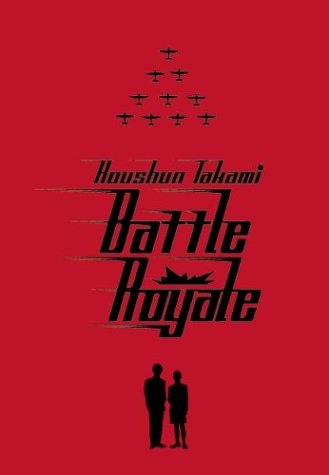
Title: Battle Royal
Author: Koushun Takami
ISBN: 978-1569317785
Publisher: Viz Media
Copyright: 2003
Genre: Horror/Action
Age
Range: 16+
Reader’s Annotation: Lured by a study trip, a class from
Shiroiwa Junior High School has been gassed, awoken in a classroom, given
weapons, and told that only one student can survive to get off the island.
Plot Summary: Japan
has become a police state known as the Republic of Greater East
Asia. Infrequently, the government selects fifty
classes of high school students to be sequestered on an island. While on the
island, they are forced to kill one another. Only one student may leave each
island. Originally created as military research, it gains popularity on
television turning victors into pop stars. While the country watches brutal
violence, the government uses the battles as a way to terrorize the population
into submission.
Shuya
Nanahara is one of the Shiroiwa
Junior High School
students that were on a bus to a study trip. He and his classmates were awoken
in a school on an evacuated island with mental collars around their necks. A
short briefing reveals that they are one of the classes selected to kill each
other. The students are expected to leave the class out into the island one by
one with a pack that has a tool or weapon. The metal collar acts as both a
tracking device and an explosive device if students linger in a “Forbidden
Zone” for too long. As students kill one another, the inhabitable grid of the
island shrinks forcing more deaths. Shaky alliances are formed as Shuya and his
fellow classmates find out who does and does not have the killer instinct.
Critical Evaluation: With the popularity of the Hunger
Games, it is important to include alternate and predating materials. This book
warns about the dangers of a totalitarian government form a Japanese point of
view. Many of the concepts of the book explore the idea of man versus man
conflicts. It also explores the choices that some people make when forced with
extreme circumstances much like Lord of the Flies. It has plenty of action,
suspense, and relatable teenaged dialog that will motivate boys back into
reading.
Author Information: Koushun Takami (高見 広春
Takami Kōshun, born 1969) is best known as the author of the novel Battle
Royale, originally published in Japanese, and later translated into English by Yuji
Oniki and published by Viz Media. Takami was born in Amagasaki,
Hyōgo Prefecture
near Osaka and
grew up in the Kagawa Prefecture of Shikoku. After graduating from Osaka University
with a degree in literature, he dropped out of Nihon University's
liberal arts correspondence course program. From 1991 to 1996, he worked for
the news company Shikoku Shimbun, reporting on
various fields including politics, police reports and economics. Source -
http://battleroyale.wikia.com/wiki/Koushun_Takami
Curriculum Ties: History, Psychology
Challenge Issues: Violence; Language
Booktalk Ideas: This book could be pitched as an alternative
to the Hunger Games to older teens. Put the class or group of teens in
alphabetical order and divide them by sex. Next, walk them through the
beginning scenario of the book and explain the premise.
Bless Me Ultima
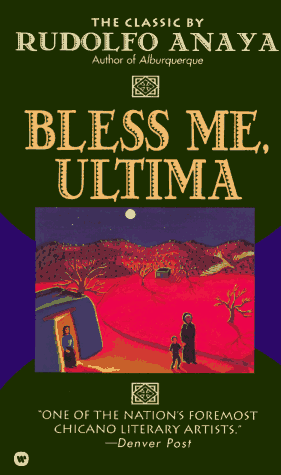
Title: Bless Me Ultima
Author: Rudolfo Anaya
ISBN: 978-0446675369
Publisher: Warner Books
Copyright: 1999 (1973)
Genre: Historical Fiction
Age
Range: 13+
Reader’s Annotation: Antonio Márez y Luna is shown how to
navigate the future and connect to the past by Ultima, a curandera who takes
Tony under her wing to teach him the healing herbs of the desert and the
ancient ways of its people.
Plot Summary: Antonio Márez y Luna (Tony) tells the story of
his youth as an adult. He describes the condition of the small town of Guadalupe, New
Mexico post World War Two. Tony begins the story when
he is about to turn seven and Ultima, the midwife at his birth, comes to live
with them. Reaching the age of reason, Ultima guides Tony through different
deaths he sees, assisting her with the purification of uncle Lucas from the
Trementina sisters, and surviving through a mysterious illness.
Tony is
conflicted. Does he follow the golden carp his father’s people use to worship? Or, does he pray to the Virgin Mary and God
the Father? After receiving his first Holy Communion, Tony is disillusioned
about religion because the Host did not explain all of the questions he had
about life and knowledge. Tony battles with the divide between the pagan,
wandering background of his father’s cattleman side and the grounded, staunch
Catholic beliefs of his mother’s farming side. Its lack of enlightenment pushes
him more toward Ultima and the truth found in nature.
Critical Evaluation: Bless Me, Ultima is easily one of the
best known Chicano books of all time. Anaya’s work is a Quinto Sol award
winner. It is a remarkable book that explores what spirituality is. We follow
Tony as he figures out that there are the Old World
ways of believing the various myths of the land and stories of ancestors. Anaya
explores the possible hang-ups that come with organized religion. He asks the tough
questions that some need further proof or explanation. Through Tony, Anaya
blends together the old beliefs with the new religion of thought as Tony tries
to learn how to blend his two families together.
Author Information: Rudolfo Anaya is professor emeritus of
English at the University
of New Mexico. He was one
of the first winners of the Premio Quinto Sol National Chicano literary award.
Winner of the PEN Center USA West Award for Fiction for his novel Alburquerque,
he is best-loved for his classic bestseller Bless Me, Ultima. His other works
include Zia Summer, Rio Grande Fall, Jalamanta, Tortuga,
Heart of Aztlan , and The Anaya Reader. He has also written numerous short
stories, essays, and children's books, including The Farolitos of Christmas and
Maya's Children. Source -
http://www.amazon.com/Bless-Me-Ultima-Rudolfo-Anaya/dp/0446675369
Curriculum Ties: Folklore, Spanish, History
Challenge Issues: Magic; Language; Violence; Sexual
Inferences
Blood and Chocolate

Author: Annette Curtis Klause
ISBN: 978-0385734219
Publisher: Ember
Copyright: 1997
Genre: Fantasy-Horror
Age
Range: 13-18
Reader’s Annotation: When a sixteen-year-old werewolf,
Vivian Gandillon, falls in love with a regular boy, she begins to live the
uncomfortably separation between her two worlds.
Plot Summary: Vivian Gandillon is a sixteen-year-old
loup-garoux. She is a werewolf like her father, the old leader of the pack, and
mother. She has a group of werewolf friends called the Five: Rafe, Finn,
Willem, Ulf, and Gregory. In their old location, the Five started to scare
humans with their wolfish half-form. One former member of the Five, Axel, had
accidental killed a girl and been seen after changing back into a human.
Arrested and imprisoned, the Five kill another human to make it appear as a
serial killer was on the loose freeing Axel. Because Axel endangered the pack,
Vivian’s father killed Axel. Soon after, a group of neighbors set the pack’s
house on fire. Vivian’s father and a few others were killed during the fire.
The pack was forced to move on leaderless.
In the new
town, Vivian starts high school. All of the girls are intimidated and jealous
of her good looks. Wanting to be accepted by human society, Vivian peruses a
“meat-boy” named Aiden. She starts dating him against her mother’s wishes. Meanwhile,
the pack is restless without a leader. Esmé, Vivan’s mother, and Astrid, Ulf’s
mother, fight over a young man named Gabriel who is more interested in Vivian
regardless of her rejections. The pack decides to elect a leader in the Old way
by the Ordeal and the Bitch’s Dance. Each is a one-against-all fight that
determines who the alpha male or female is. Gabriel wins the Ordeal. Astrid
attacks Esmé with killer intentions during the Bitch’s Dance. Vivian jumps in
to save her mother’s life thereby becoming the alpha female and Gabriel’s mate.
She runs away with this realization, and Gabriel makes it clear to her that he
will wait as long as she needs.
Vivian’s relationship
heats up with Aiden, and she wants to show him her true forms before they are
intimate. He crouches afraid in a corner throwing things at her. She jumps out
of the window so that she doesn’t do anything harmful to him. The next day, she
wakes up with human blood on her nails and no memory of the rest of the night.
The news says a man was killed by a wild animal. It happens again, including a
human hand she finds on the floor. Convinced she is the murderer, she douses
herself in kerosene, but before she can light the match she is stopped. Ulf
tells Vivian that Rafe and Astrid were setting her up for the murders as
revenge for the Bitch’s Dance.
The second
victim was carrying a note for Vivian from Aiden. He wanted to meet her for old
times sake, but it is a trap. Aiden pulls a gun on Vivian with silver bullets.
Before they can settle their dispute, Astrid and Rafe show up with the intent
to kill Aiden and frame Vivian. But, Gabriel is gathering the pack to pass
Judgment on Astrid and Rafe. Will Aiden shoot Vivian? Will Astrid and Rafe kill
them both and frame Vivian? Will Gabriel and the pack show up in time?
Critical Evaluation: In 1998, Blood and Chocolate won a YALSA
Award for Best Books for Young Adults. This story is a good example of what
expectations are heaped on teens. Vivian is expected to live and love the
loup-garoux life while living in the human world. After the Bitch’s Dance
fight, she is expected to become the Queen Bitch and be Gabriel’s mate. Teens
want to be able to rule their own lives and make their own decisions.
Author Information: Annette Curtis Klause (born June 20,
1953) is an American writer and librarian, specializing in young adult fiction.
She is currently a children's materials selector for Montgomery County Public
Libraries in Montgomery County,
Maryland. Born in Bristol, England,
she now lives in Hyattsville,
Maryland with her husband Mark
and their cats. She holds a Bachelor of Arts degree in English literature and a
Master of Library Science degree from the University
of Maryland, College Park. Source -
http://en.wikipedia.org/wiki/Annette_Curtis_Klause
Curriculum Ties: English, Folklore
Challenge Issues: Violence; Sexuality; Language
Booktalk Ideas: Folklore – One could start talking about the
folklore of werewolves and weave the storyline of Vivian right into the speech.
Brave New World
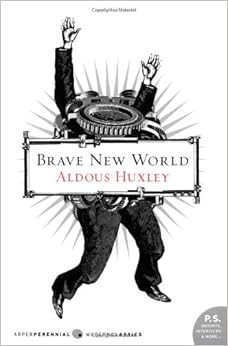
Title: Brave New World
Author: Aldous Huxley
ISBN: 978-0060850524
Publisher: Harper Perennial Modern Classics
Copyright: 2006 (1932)
Genre: Science Fiction
Age
Range: 15+
Reader’s Annotation: Take a peek at the dystopian world of
science gone wild to please every person to fit into society’s design.
Plot Summary: The World
State is a peaceful,
stable global society that is limited to two billion people in the urban areas.
Food, water, and other resources are plentiful. People no longer give birth.
Children are, “decanted’ by hatcheries. These hatcheries produce people that
are genetically modified for detailed job specifications and intelligence
levels that fit within the societal caste system. The alphas and betas rule as
they were decanted from one single egg. The deltas, epsilons and gammas are the
grunt workers that are limited in their intelligence and physical growth. One
egg could spawn ninety-six of these children using the “Bokanovsky’s Process.”
Due to the manipulated lack of intelligence and ambition, they are easier to
control to keep society harmonious.
The society
is full of manipulations. For the economy to keep going, citizens are
brainwashed to not fix what they have and always buy something new. They are
constantly engaged in social activities and community. If someone is angry,
sad, or stressed, they are to take soma. Soma is a drug that mellows people out
as a personal “holiday.” Since reproduction is done by a hatchery, sex has
become a social and recreational activity. It is part of the conditioning
process that happens as a child like zipper play. The mantra is “everyone
belongs to everyone else.” Monogamous relationships usually happen after fifty.
People typically die at sixty.
Lenina
Crowne is a hatchery worker that follows the rules of society and is quite
happy with her life. Bernard Marx is an alpha plus, the top caste. He is
shorter and skinnier than most alpha pluses. It gives him an inferiority
complex. As a psychologist, he figures out all of the beliefs that their people
hold as truth are just whispers in their ears. With this knowledge and the
desire to be an individual, Bernard is often a social outcast. Likewise, his
best friend, Helmholtz Watson, is the more than perfect alpha plus that wants
to write poetry.
On a trip
to the Savage Reservation, Bernard and Lenina witness native ceremonies that
they think are savage. They also meet Linda. She worked for Bernard’s Boss and
came there with him. She became pregnant and gave birth to John the Savage
living with the natives out of shame. They lived a hard life. Bernard decides
to bring them back. Linda goes straight to the hospital and is put on a
constant stream of soma. John becomes a spectacle, and Bernard finally gains
the acceptance he is looking for. As quickly as the fame came, it was gone.
Lenina tries to seduce John but fails as he attacks and accuses her of being an
“imprudent strumpet.” Linda falls into a coma and passes away in front of John.
A group of children that are being conditioned about death annoys John to the
point where he throws soma out of the window and starts a riot.
Bernard,
Helmholtz, and John are all brought before the Resident World Controller for Western Europe. They do not know their fate, but they are
pretty sure it involves banishment.
Critical Evaluation: Brave New World is an important piece
of literature to the world abroad. It warns of reproductive technology,
psychological manipulation, and classical conditioning that create a society of
sheep that is neatly ordered and divided. The Modern Library Editorial Board
ranked it number five on its list of best English language novels of the
twentieth century. It is an important book to read as a teen. It uses an
adverse moral system to teach them about how to find themselves as an
individual when most teens are just trying to fit in. It also points out that
individuals are rewarded in some ways and damned in others. While it is a
satire about what the world could be like, it also serves as a reminder to
those tens to embrace each others differences. What makes us different makes us
strong. It is through diversity that we are able to overcome adversity.
Author Information: Aldous Huxley was born July 26, 1894, in
Godalming, England. He published his first
book in 1916 and worked on the periodical Athenaeum 1919–1921. Thereafter he
devoted himself largely to his own writing and spent much of his time in Italy until the late 1930s, when he settled in California. He
established himself as a major author in his first two published novels, Crome
Yellow and Antic Hay. Author Aldous Huxley expressed his deep distrust of
20th-century politics and technology in his sci-fi novel Brave New World, a
nightmarish vision of the future. Source
-
http://www.biography.com/people/aldous-huxley-9348198#synopsis&awesm=~oDwPf0Tka99eoa
Curriculum Ties: Censorship, Political Science, Social
Science,
Challenge Issues: Anti-Family; Anti-Religion
Booktalk Ideas: Utopia – Draw teens in by explaining the
rules of the utopian society and flip it on them to talk about the dark seedy
side of society. Soma – Explain what soma is and what it makes one feel, but
also explain what it blocks and how it affects their life.
Cinder
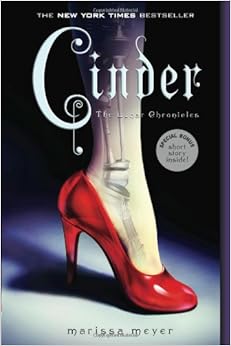
Title: Cinder
Author: Marissa Meyer
ISBN: 978-0312641894
Publisher: Feiwel & Friends
Copyright: 2012
Genre: Science Fiction
Age
Range: 13 - 17
Reader’s Annotation: Master mechanic Cinder is asked by the
Prince Kai to fix an android that leads her down a path of self discovery and
intrigue.
Plot Summary: Cinder is a master mechanic who runs an
android repair shop in New Beijing. Unlike her stepmother, Adri, and
stepsisters, Pearl
and Peony, Cinder is a cyborg. The prince of New Beijing, Prince Kai, drops off
an android for repair. Soon after, there is a letumosis breakout at the market.
Letumosis is the plague that has terrorized the world and infected Emperor
Riken, the prince’s father.
Cinder and
Peony go off to find a part for Adri’s hover card. While at the junkyard, they
discover a gas powered car and Peony contracts the plague. She is taken away.
By the time Cinder gets home, Adri has already sold her off for scientific
experiment. Cyborgs were being used to test for letumosis cures. A researcher,
Dr. Erland, draws her blood and injects her with letumosis. Her body destroys
the infection, and the doctor takes her to a different room to talk. She tries
to attack him, but resists as she feels calmed by him. She is told she is
immune and her asks her about her past. To her knowledge, she and her parents
were in a horrible crash that killed them and made her into a cyborg. She did not
remember anything pre-surgery. Linh Garan became her guardian and soon died
from the plague. Cinder agrees to do experiments for money. Dr. Erland pinches
between her shoulder blades, and she passes out.
Kia walks
down to the research lab to see if there is any progress and runs into Sybil
Mira, the head thaumaturge to Queen Levana the matriarch of the moon. Kai
discusses Princess Selene, the only other heir to the thrown, and the deadly
fire that may have took Selene’s live. Stories tell of Selene surviving on
earth. Torin, a royal advisor, tries to put these rumors to rest. Cinder wakes
up to Dr. Erland and Kai. She escapes with the excuse that she was fixing a med
droid and would repair his android soon. Back at the apartment, she argues with
Adri and plans to escape using the car she found.
Emperor
Riken dies, and Queen Levana announces that she is going to come down to meet
Prince Kai for alliance talks. Cinder visits Peony who has stage three
letumosis. During that time, she discovers that the dead are having their ID
chips removed and sold on the black market. Cinder heads back to the palace,
declines Prince Kai’s invitation to the ball, and finds out that she is a Lunar
who immigrated to earth. She goes home overwhelmed and gets straight to fixing
Prince Kai’s android. Finding a communication chip that shouldn’t be there, she
plucks it out and the android reboots with information about Princess Selene.
Cinder goes to the palace to drop off the droid and gets caught up in the
protests against Queen Levana who sees her in the crowd after Levana
brainwashes the crowd to calm down. Levana demands the fugitive and gives Kai a
letumosis cure too late for the Emperor.
Dr Erland gives some of the cure to Cinder who goes straight
to Peony. Peony dies and Cinder causes a scene to ensure that she gets Peony’s
ID chip. When Cinder returns home, Adri forbids Cinder go anywhere, takes her
cyborg foot, and destroys her android Iko. Cinder starts to load up the car to
leave the city when communication ship activates in a netscreen. It is a girl
from lunar orbit who tells Cinder about Levana’s devious plan to marry Prince
Kai and take over earth. Prince Kai is at the ball and must be warned. Can
Cinder get the car working enough to warn Prince Kai? Can she get to the ball
in time? What will she wear?
Critical Evaluation: While some might think that Cinder is a
silly little sci-fi adaptation of Cinderella, there are a few big issues
addressed throughout the book. The over arching theme seems to be the treatment
of the cyborg people. They are treated in this world as second class citizens.
By using this perspective, a teen might be able to relate to their status as a
second class citizen, because they are not children but not yet become an
adult. It also has the ability to open their eyes to the history of the United States
and what it means to segregate different activities and facilities based on who
you are physically. It champions the idea that our differences can make us
stronger. It also makes teens think about how they treat other people and why
they treat them that way.
Author Information: Marissa Meyer lives in Tacoma, Washington,
with her husband and three cats. She’s a fan of most things geeky (Sailor Moon,
Firefly, color-coordinating her bookshelf . . .), and has been in love with
fairy tales since she was given a small book of them when she was a child. She
may or may not be a cyborg. Cinder is her first novel. Source - http://www.marissameyer.com/media/
Curriculum Ties:
Folklore, Adaptations, History
Challenge Issues: Disobedience
Booktalk Ideas: Mechanically Minded – One could talk about
the different robotic possibilities of the future and introduce Cinder as a
modern marvel. Plague Zone – Describe the gritty world of the plague that
ravages the cities in Cinder’s world.
Divergent

Title: Divergent
Author: Veronica Roth
ISBN: 978-0062024039
Publisher: Katherine Tegen Books
Copyright: 2012
Genre: Action/Science Fiction
Age
Range: 14 - 18
Reader’s Annotation: One choice can decide who you become, follow Tris as she fights to carve out a place for herself in a post-apocalyptic Chicago.
Plot Summary: Post-apocalyptic Chicago is separated into five factions: Abnegation,
for the selfless; Amity, for the peaceful; Candor, for the honest; Dauntless,
for the brave; and Erudite, for the Intelligent. Each year, all
sixteen-year-olds take an aptitude test that describes the faction for which
they are best suited. When given the results, the person is able to choose to
stay with their family's faction or change factions. Society’s credo is faction
over blood.
Beatrice
Prior was is born into an Abnegation family. She does not feel like she
belongs. Since she is sixteen, she takes the test. Instead of one or two
results, she has three: Abnegation, Erudite, and Dauntless. This multiple
aptitude makes her Divergent, which is dangerous. The tester, Torey, warns her
not to tell anyone. Before the Choosing Day, she struggles over whether to stay
in Abnegation to satisfy her parents or choose another faction. On Choosing
Day, Beatrice decides to leave Abnegation and join Dauntless, while her brother
Caleb chooses Erudite.
Four, the
Dauntless instructor, explains that not all initiates enter Dauntless only the
top ten. The rest will be factionless. She renames herself Tris and befriends
Christina, Al, and, Will. Peter, another transfer, constantly patronizes her
with his gang including a big lug named Molly. The initiation comes in three
stages, the first is physical involving guns, knives, and hand-to-hand combat. There
are many brutal fights between the different transfers. Tris drags in the
standings and worries for she will make it. During one fight, she defeats Molly
and gets a passing rank. On a wargame, Tris spends time with Four and finds out
he is afraid of heights. She devises a winning strategy and is praised and
accepted by both transfers and Dauntless born. Will is ranked number one.
Jealous, Peter stabs Will in the eye with a butter knife. During parent
visiting day, Tris discovers that her mom was originally Dauntless and also
Divergent. Her mom asks her to see her brother and ask about a serum.
On a
political scale, Erudite tries to uproot Abnegation as the leadership of the
city. Erudite's reports accuse Abnegation's leader, Marcus, of abusing his son,
who joined Dauntless two years before. More reports are released about Caleb
and Tris leaving Abnegation as well. Tris goes to Erudite head quarters and
sees Caleb. She asks about the serum and they get in a fight. She sees the Erudite
leader for a brief talk that weights heavy in threats.
Tris and
the other initiates begin stage two. Similar to the aptitude tests, stage two
involves simulations where the person has to overcome common fears. Tris recognizes
that she is under a simulation while others do not because she is Divergent.
Tris is ranked first. Four warns her to take it slower. Peter, Drew, and Al
attack and sexually assault Tris in an attempt to throw her into the chasm at
Dauntless headquarters. Four comes to her rescue. Al begs for forgiveness
later. She rejects him. He commits suicide. The final stage is much like the
second, but the fears that each candidate has to overcome is their own specific
fears. There are usually eight to fifteen fears in their fear landscape. The
smallest amount was four. While preparing for this stage, Four lets Tris into
his fear landscape. He only has four, hence his name. She learns that he is
Tobias, Marcus’ son that was abused. The final test is upon them and Tris has
to go through her fear landscape in front of Dauntless leadership. She is able
to navigate through each fear with some ease. She freaked out the Dauntless
leadership saw that she is afraid of intimacy with Four. After passing, she is
now Dauntless. She is injected with a new "tracking" serum. Before
the final ranking reveal, Tris and Four share an intimate moment expressing
their feelings. Tris is revealed to be number one.
While
celebrating, she realizes the serum is part of an Erudite plan to invade Abnegation.
The serum induces the Dauntless into being robotic soldiers that do whatever
the master control tells them to do. Anyone who is Divergent is not affected
including Tris and Four. After arriving at the Abnegation compound, Tris and
Tobias try to break away from the pack to escape. The Abnegation compound has
been invaded and Abnegation leaders are being murdered in the street. In
scuffle, Tris is shot and Four refuses to leave her. They are brought before Jeanine,
the Erudite leader. Four is injected with a serum that controls his sight and
sounds counteracting the Divergence. Tris is sentenced to death by glass box.
As the water fills the box, Tris’ mom breaks the tank to rescue her. With not
much time left, Tris has to save the Abnegation from execution, find Four, and
save her friends from becoming robotic murderers.
Critical Evaluation: Divergent
has been compared to The Hunger Games
for its content of a young female protagonist that is fighting against a
corrupt system. One might think that just one of these books should be
included. The difference between the two books is the choices that are made.
While Katniss is forced into the situation that she faces, Tris is able to make
her own life choices. This book is a good example of how teens can remain in
charge of their lives. It also addresses the idea of identity. Identity is
important for teens. They are trying to figure out who they are and who they
want to be. For all of these values and more, YALSA put it in their 2013 list
of Teen’s Top Ten Vote. It also won the Sakura Medal Contest.
Author Information: Veronica Roth is a twenty-two-year-old
debut author and a recent graduate of Northwestern University's
creative writing program. While a student, she often chose to work on the story
that would become Divergent instead of doing her homework. Now a
full-time writer, she lives near Chicago.
Source - http://www.harpercollins.com/authors/37588/Veronica_Roth/index.aspx
Curriculum Ties: Social Science
Challenge Issues: Violence; Sexuality; Sexual Assault; Child
Abuse
Booktalk Ideas: Differences: Start by dividing the teens
into different groups and give them the names and values of the faction. Talk
about how the different factions form the base of the society.
Do Androids Dream Electric Sheep?

Title: Do Androids Dream
Electric Sheep?
Author: Philip K. Dick
ISBN: 978-0345404473
Publisher: Del Rey
Copyright: 1996 (1968)
Genre: Science Fiction
Age
Range: 16+
Reader’s Annotation: Rick Deckard tracks down outlaw
androids that have stolen human identities on a dilapidated earth.
Plot Summary: Northern California
is the bounty district of Dave Holden. Whenever Dave gets a case he doesn’t
have time for or doesn’t want, he gives it to Rick Deckard. Rick doesn’t see
himself as a bounty hunter or a peace keeper. Dave ends up in the hospital
after investigating eight Nexus -6 androids. Two of the eight had been put
down, but six remain. Rick takes the assignment. He and his wife were talking
about the lack of having an organic pet, one was not genetically manufactured. Deckard
owns a malfunctioning genetically engineered black-faced Suffolk ewe being unable to afford an organic
one unlike their neighbor. His wife uses a mood device to keep her emotionally
stabile.
Rick
travels in his flying car to Seattle
to the Rosen Industries plant to administer a bounty hunter "empathy
test," that is used to detect an android by asking very human questions.
Rick is introduced to Rachael, as the niece of Eldon Rosen the head of the
Rosen Association. Rachael hesitates on a typical human question and fails the
test. The Rosens explain that Rachael lacks normal empathy due to being raised
on a spaceship that was attempting to colonize Proxima. Rachael tries to bribe
Deckard with the gift of a real owl, but during the conversation he verifies
his finding that she was newest Nexus-6. The Rosen Industries was just trying
to discredit the empathy test. Rachael has had human memories implanted in her
and does not know she is an android, but this is a Rosen ruse to trade sexual
favors for bounty hunter android protection.
Rick ponder
the meaning of humanity, morality and empathy while retiring a malfunctioning
opera singer android. He is arrested and taken to the police station where he
is accused of being an android. He is rescued by fellow bounty hunter Phil
Resch. They figured out that the police station was a fake ran by androids.
Inbetween
Rick’s storyline is the tale of J.R. Isidore. He is an animal repair shop owner
who cannot leave earth because of his low I.Q. from a radioactive dust
accident. He lives alone in a large apartment building. Pris Stratton, an
identical model Nexus-6 as Rachael Rosen, moves into the building. Isadore
tries to make friends with her and finds the other five missing Nexus-6
androids. They use Isadore to lure and trap the bounty hunter that is tracking
them, Rick. Rick recruits Rachael to help him find them. They find the location
of the androids. Rachel seduces Rick into having sex with her. Afterward, Rick
confesses love and Rachael rebuffs him. Rick sends her away to Rosen and takes
off to see if he can retire the other six androids.
Critical Evaluation: Do
Androids Dream Electric Sheep? was nominated for the Nebula award in 1968.
It was also number fifty-one in the Locus Poll for All Time Best Science
Fiction Novel before 1990. Philip K. Dick is a prolific American writer for
science fiction. This story tackles some of the hard questions like what does
it take to be human? What is humanity? What is morality? These are all
questions that teens ask themselves as they make their way through each day.
The metaphor of the sheep reminds teens that they are a special product of
their parents. They are not to take that for granted by being part of the
popular herd.
Author Information: Philip Kindred Dick (1928 - 1982) or
Philip K. Dick was an American writer. Most of his novels, short fiction and
essays are written about science fiction. Philip K. Dick’s works were concerned
with political and social structures and how they related to the individual’s
sense of self and sanity. He often presented dystopias that are dominated by
political and business hegemonic organizations. Schizophrenia and drug abuse
are often represented as leading to transcendentally abject states. Philip K.
Dick used these plot devices to explore his larger intellectual interests of
theology and metaphysics. Philip K. Dick considered himself a “fictionalizing
philosopher.” His novel The Man in the High Castle
won the Hugo Award, and his novel Flow My Tears, the Policeman Said won the
John W. Campbell Memorial Award. Time magazine declared that Dick’s Ubik was
one of the greatest novels written in English since 1923. In 2007, Dick was
inducted into The Library of America series. Philip K. Dick was a prolific
writer, authoring over one-hundred and twenty pieces of short fiction and
forty-four novels. Ten movies have been adapted from his fiction. Most
famously, these movies included Blade Runner, Total Recall and A Scanner
Darkly. Most of Philip K. Dick’s success came late in life or posthumously, and
he spent most of his career in poverty. Source - http://www.egs.edu/library/philip-k-dick/biography/
Curriculum Ties: Philosophy, History
Challenge Issues: Violence; Sex
Ender’s Game

Author: Orson Scott Card
ISBN: 978-0812550702
Publisher: Tor Science Fiction
Copyright: July 15, 1994 (Original 1985)
Genre: Science Fiction
Age
Range: 14+
Reader’s Annotation: After a near alien invasion, the earth
joins resources toward the creation of perfect soldiers like Andrew “Ender”
Wiggin who is recruited to be the savior of the human race.
Plot Summary: Andrew “Ender” Wiggin is a Third, the third
child in an earth that is under strict population control. He is the last brilliant
child of the Wiggin family to have the chance to make it into Battle School.
His brother Peter was too sadistically aggressive. His sister Valentine was too
passive. Ender is just the right combination of intelligence, forethought, and
resilience to make it into Battle
School.
The rigorous and high pressure environment and training of Battle School
brings outwardly the best attributes of Ender: leadership, intelligence, and
innovation. As his successes grow, his internal conflict grows. Ender is constantly
fighting a crushing psychological battle of isolation, intense peer rivalry,
pressure from adults, and the fear of not understanding the enemy. Is Ender
this world’s savior or destroyer? The future of the earth is dependent on
Ender’s leadership and the performance of his schoolmates in the battles to
come.
Critical Evaluation: Ender’s Game has many credentials. It
is both a Hugo Award and Nebula Award winner as well as a New York Times
Bestseller. The story is all about conflict. His inner conflict is between who
he wants to be and who he has to be. Will ender choose to be a ruthless killer
or will he decide to make friends and peace with his fellow cadets? This
conflict is often shaped by the adults and other cadets that surround Ender. There
is conflict between Ender and Colonel Graff. Graff puts obstacles and
challenges in Ender’s way from training to conflicts with other cadets. The
cadets and their egos/competitive nature constantly challenge Ender. Ender is
also fighting society. Society needs Ender to defeat the far off alien race,
known as “Buggers,” that might wipe out the human race. Ender struggles with
the idea of genocide against a race that he does not fully understand. Card
does a fine job of mixing up these different conflicts and bringing to the
surface the key conflicts that make themselves important to Ender in
appropriate intensity.
Author Information: Orson Scott Card is the author of the
continuing Ender series including Speaker for the Dead and Ender’s Shadow. He
also writes fantasy, Biblical fiction, and poetry. Being a member of the Church of Later Day Saints, his writing often has
a biblical flair or moral. He is a professor of writing at the Southern
Virginia University.
Curriculum Ties: Psychology, adolescent development,
strategy, leadership, politics.
Challenge Issues: Youth Violence; Psychological Abuse;
Anti-Authoritarian
Fahrenheit 451

Title: Fahrenheit 451
Author: Ray Bradbury
ISBN: 0345342968
Publisher: Ballantine Books; New Edition edition (1979)
Copyright: 1953
Genre: Science Fiction
Age
Range: 15+
Reader’s Annotation: In a society that burns books when
found, a fireman struggles to understand what his role is in society. When he
finds out the goodness that books hold, does he burn them for societal good or
save them because they are the key to what he seeks?
Plot Summary: Guy Montag is a fireman. But this is not the
type of fireman who we think of putting out fires. Instead, the dystopian America
that Guy lives in requires firemen to start fires. The fires are started with
any piece of art or culture from the past society of America or the world to be used as
kindling. Books are public enemy number one. His job is to purge these items
and memories from society at large. The new American society do not read books,
have thoughtful conversations, spend time alone, or even go outside. They are a
homogenized herd that participate in programs with their wall sized television
and radio sets.
When Montag meets a young teen named Clarisse on his way to
work, she opens his eyes to nature and the secrets to life that books contain.
Montag starts to see the importance of books. These independent thoughts and
musings further open the rift between Guy and his wife. His questions start to
bleed over into his work life. Montag witnesses a woman who is burned to death
because she would rather die with her books. After this, he starts to take
books home and learns how to read. Chief Beatty notices Montag’s odd behavior
and confronts him about books and their contents. Beatty’s confrontation sets
off a chain of events that are the beginning of the end for Montag’s participation
in the new American society.
Critical Evaluation: In 2000, Ray Bradbury received the
National Book Foundation Medal for Distinguished Contribution to American
Letters for his work Fahrenheit 451. This work could be considered part of the
foundation of American science fiction. Bradbury uses a dystopian America
to address the problem of censorship. While the reasons of Fahrenheit 451’s
world book burning are purposefully ambiguous, the reality of the paranoid
1950s and the Red Scare are quite clear. There is a fear in information. The
government is afraid that if people have access to contrary information they
may read it and act upon it. Bradbury believes that people should be allowed to
read anything that they would like, whether they act upon these new ideas is
another matter. Access to information and freedom to search it freely should be
a base right. Bradbury believed that any deviation from no censorship would be
just one step closer to book burning.
Author Information: Ray Bradbury is the recipient of the
2000 National Book Foundation Medal for Distinguished Contribution to American
Letters, the 2004 National Medal of Arts, the 2007 Pulitzer Prize Special
Citation, and numerous other awards. His other works include The October
Country, Dandelion Wine, A Medicine for Melancholy, Something Wicked This Way
Comes, I Sing the Body Electric!, Quicker Than the Eye, and Driving Blind. As a
self taught author, Bradbury worked during the day, and wrote during the night
eventually becoming a full time writer. His perseverance and drive never left
him from his beginning to his passing at age 91 in 2012.
Curriculum Ties: Politics, Philosophy, History, Censorship.
Booktalk Ideas: Censorship – Discussion can be made about what censorship is and the extreme case that Fahrenheit 451 shows. The history of censorship can be explored in real life cases like American and German propaganda during World War II and pre-war German book burning.
Hamlet

Title: Hamlet
Author: William Shakespeare
ISBN: 9780743477123
Publisher: Simon & Schuster
Copyright: 2003 (1602)
Genre: Play/Historical Fiction
Age
Range: 15+
Reader’s Annotation: Prince Hamlet searches for the truth
about his father’s murder and bitter revenge.
Plot Summary: Hamlet is the prince of Denmark whose father mysteriously
died. His uncle, Claudius, has married his mother and taken over the thrown. Denmark is on the brink of war with Norway.
The Norwegian prince Fortinbras is expected to lead the invasion. The play
opens with the ghost of King Hamlet appearing to the sentry that guards Elsinore, the Danish royal castle. The ghost appears and
disappears to each of the guards. The decide to tell prince Hamlet that his
father’s ghost is wandering the castle. Inside the castle, Claudius and
Gertrude talk to Laertes and Polonius about a trip to France. Hamlet mopes around
pondering his want to find the truth and get revenge for his father. Marcellus,
Horatio and the sentry enter and tell Hamlet about his father’s ghost. He is
determined to see it himself.
Claudius
and Gertrude have enlisted two school firens, Rosencrantz and Guildenstern, to
keep an eye on Hamlet. Hamlet is wise to this. That night, the ghost appears to
Hamlet and tells him that Claudius murdered him by pouring poison in his ear.
The ghost demands revenge. Polonius bids farewell to Laertes as he goes to France
for his studies. They both warn Ophelia of Hamlet’s foul disposition. Ophelia
meets Hamlet secretly. He is acting weird and tries to drive her away,
specifically to a nunnery. Hamlet is unsure that the ghost has told him the
truth. He writes a play for a group of actors that had just arrived that re-enacted
his father's murder. Hamlet will gauge Claudius's response to see if he is guilt
or innocence. After the play, Gertrude demands Hamlet explain himself in her
bedroom. On the way there, Hamlet hears Claudius confess to killing King
Hamlet. Prince Hamlet does not kill him there in the chapel for fear of Claudius
going straight to heaven. Hamlet has a spat with his mother while Polonius
spies. Hamlet kills Polonius accidentally and hides the body. The ghost pops up
and reminds Hamlet of his duty. Gertrude cannot see the ghost and calls Hamlet
mad. Claudius, in fear, banishes Hamlet to England under Rosencrantz and
Guildenstern’s watch.
Depressed
by her father’s death, Ophelia wanders Elsinore
singing weird songs. Laertes arrives back from France full of rage from his dead
father and demented sister. Claudius and Laertes plan to poison Hamlet by
either sword tip or wine. Their collusion is interrupted by the news that Ophelia
has drowned. Two gravediggers discuss Ophelia's suicide while digging her
grave. Hamlet arrives with Horatio and banter about mortality. Laertes arrives
at the gravesite and begins a fight with Hamlet. The fight is broken up, and
they all go to Elsinore. With Hamlet back
home, he is ready to avenge his father.
Critical Evaluation: Hamlet
is often a play that is covered in American high schools. It is a good piece of
literature for any collection. At one time or another teens are going to be
exposed to Shakespeare’s work. The language used in Hamlet is a high lexicon that will help them build English skills.
During the education of teens, Hamlet
will be discussed at least once. Often, the various philosophical statements
will travel into other classes. The knowledge of Hamlet will aid in understanding those references. There are many
versions of Hamlet. If a library has an audio visual collection, having this
play will pair well with a video version of the play or a more theatrical movie
release.
Author Information: Information about the life of William
Shakespeare is often open to doubt. Some even doubt whether he wrote all plays
ascribed to him. From the best available sources it seems William Shakespeare
was born in Stratford
on about April 23rd 1564. His father William was a successful local businessman
and his mother Mary was the daughter of a landowner. Relatively prosperous, it
is likely the family paid for Williams education, although there is no evidence
he attended university.
In 1582 William, aged only 18, married an older woman named
Anne Hathaway. Soon after they had their first daughter, Susanna. They had
another two children but William’s only son Hamnet died aged only 11.
After his marriage, information about the life of
Shakespeare is sketchy but it seems he spent most of his time in London writing and
performing in his plays. It seemed he didn’t mind being absent from his family
- only returning home during Lent when all theatres were closed. It is
generally thought that during the 1590s he wrote the majority of his sonnets.
This was a time of prolific writing and his plays developed a good deal of
interest and controversy. Due to some well timed investments he was able to
secure a firm financial background, leaving time for writing and acting. The
best of these investments was buying some real estate near Stratford in 1605, which soon doubled in
value. Source - http://www.biographyonline.net/poets/william_shakespeare.html
Curriculum Ties: English, Theater Arts
Challenge Issues: Violence
Booktalk Ideas: Rotten – One can use the story of Hamlet by
introducing it as a “who done it” mystery.
Harry Potter and the Prisoner of Azkiban
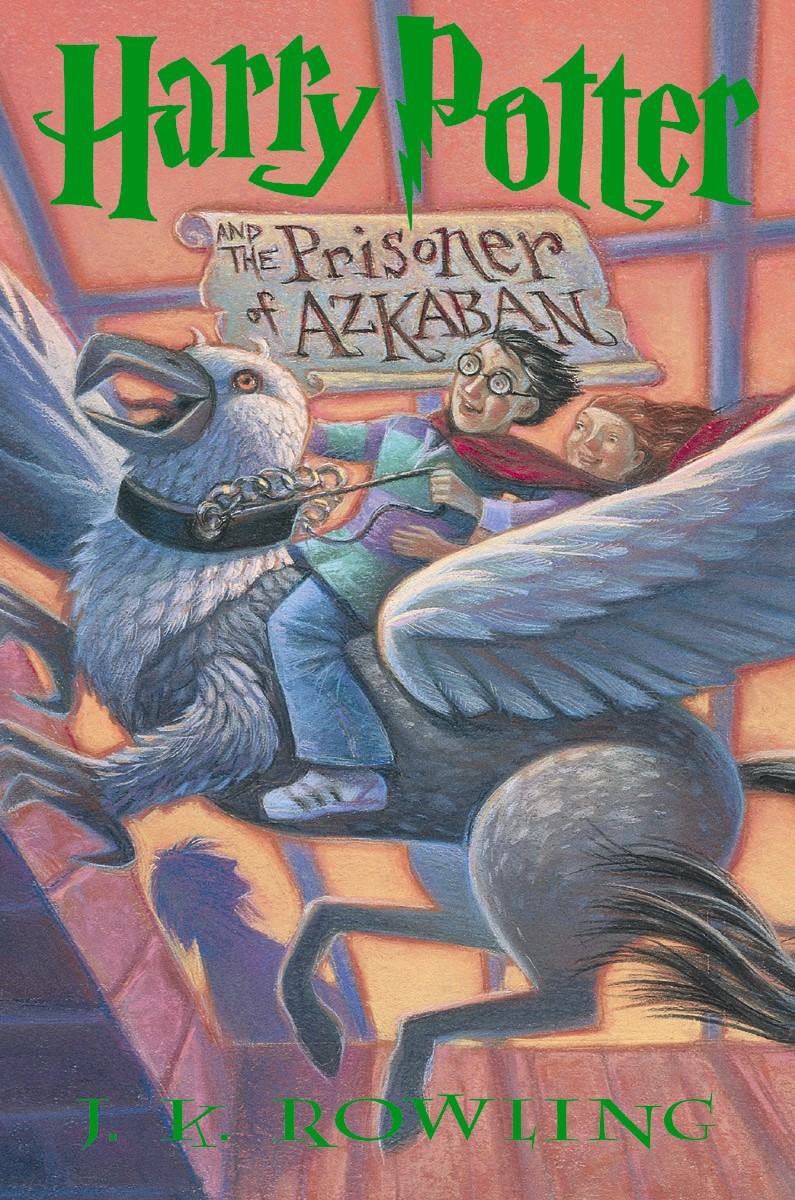
Author: J.K. Rowling
ISBN: 9780747542155
Publisher: Scholastic
Copyright: 1999
Genre: Fantasy
Age
Range: 13 - 16
Reader’s Annotation: Harry Potter with his friends
investigate the fugitive Sirius Black as they delve deeper into Harry’s family
history.
Plot Summary: The book opens up with Harry back at the
Dursley’s. Muggle TV has been publicizing a prisoner escape by a man named
Black. Aunt Marge insults Harry’s parents on a visit and he involuntary inflates her. He takes the
Knight Bus to Diagon Alley to await the beginning of school. Cornelius Fudge,
the Minister for Magic, warns Harry against the underage use of magic and magic
in front of Muggles. The night before he is supposed to leave for Hogwarts, Harry
is told that Sirius Black is a convicted murderer who might want to hurt Harry
due to his connection with Voldemort. On the trip to Hogwarts, the train
stops and a Dementor boards causing Harry to faint. The new Defence Against the
Dark Arts teacher, Professor Lupin, fights it back. The Dementors will be
guarding the perimeter of Hogwarts. Harry has many run ins with the Dementors
including a Quidditch match that lands Harry in the infirmary and his broom in
the trash heap as it was destroyed by the Whomping Willow. To fight off the
Dementors, Lupin teaches him the Patronus Charm.
With the
help of George and Fred Weasley and The Marauder's Map Harry is able to sneak
into Hogsmeade. He walks around wearing his cloak of invisibility. Passing by some
of his teachers, he overhears them and Fudge explain that Black was the
Potter’s secret keeper. It must have been Black that betrayed them to Voldemort.
Afterward in the pursuit, Black killed thirteen Muggles and his former friend
Peter Pettigrew. Ron accuses Hermione's cat Crookshanks of eating his rat,
Scabbers. Harry gets an expensive broom, a late-model Firebolt, from an unknown
source. Late one night, Harry looks at The Marauder's Map and sees Peter Pettigrew. He follows it to find nothing but
trouble with Snape.
Hagrid
becomes the Magical animals teacher. During one lesson about hippogriffs, Draco Malfoy provoke a hippogriffs
named Buckbeak into attacking him. Hagrid tries to save Buckbeak, but he has
been sentenced to death. Soon after, Scabbers reappears. A big black dog
appears and attacks Ron with Scabbers in tow and drags them both down
underneath the Whomping Willow through a tunnel into the Shrieking Shack. Harry
and Hermione follow. It is revealed that the dog is Sirius Black. Lupin enters
and explains the past that the real secret keeper was Peter Pettigrew. Peter
Pettigrew betrayed the Potters and Black was framed. Snape tries to intervene
but is knocked out by Harry. Lupin and Black transform Pettigrew back into
human form and prepare to kill him, but they are stopped by Harry. Harry wants
to clear Black, his godfather, from any wrong doing. On the way back to the
castle, Lupin begins transforming into a werewolf. Pettigrew escapes again as
Black prevents Lupin from attacking the kids. Dementors approach and all three
lose consciousness.
When they wake up in the hospital, Harry, Ron, and
Hermione are told that Black has been sentenced to receive the Dementor's kiss,
which removes the soul of the recipient. Dumbledore advises Hermione and Harry
to use Hermione's time-turner. It is a device she has been using to take more
classes. Now Harry and Hermione have to try to save Buckbeak and stop Black
from receiving the Dementor's kiss.
Critical Evaluation: Harry Potter and the Prisoner of Azkaban is the third novel in
the Harry Potter series. It has
won the the 1999 Whitbread Children's Book Award, the Bram Stoker Award, the
2000 Locus Award for Best Fantasy Novel, and was nominated for other awards
like the Hugo. It sold over 68,000 copies in three days and millions worldwide.
It is a must have in modern youth fiction. The reason to include this specific
Harry Potter book into a young adult collection is its subject matter. In this
volume Harry is facing the truth about his parents, from the facts of their
murder to the possibility of new family. These are real issues that some teens
have to deal with. While they may not be at a magical wizard school, they are
trying to figure out who their parents were and who they want to be. As Harry
the character has grown up, so do the teens that read these books. J.K. Rowling
does a great job of maturing Harry throughout the books to a believable and
relatable level.
Author Information: Born in Yate, England,
on July 31, 1965, J.K. Rowling came from humble economic means before writing
Harry Potter and the Sorcerer's Stone, a children's fantasy novel. The work was
an international hit and Rowling wrote six more books in the series, which sold
into the hundreds of millions and was adapted into a blockbuster film
franchise. In 2012, Rowling released the non-Potter novel The Casual Vacancy.
Source - http://www.biography.com/people/jk-rowling-40998#awesm=~oDHabRZpRsR6EV
Curriculum Ties: English, Social Studies
Challenge Issues: Magic
Booktalk Ideas: Family – One can start talking about
different types of family members ending with the godfather as a transition to
Harry’s story.
Subscribe to:
Comments (Atom)